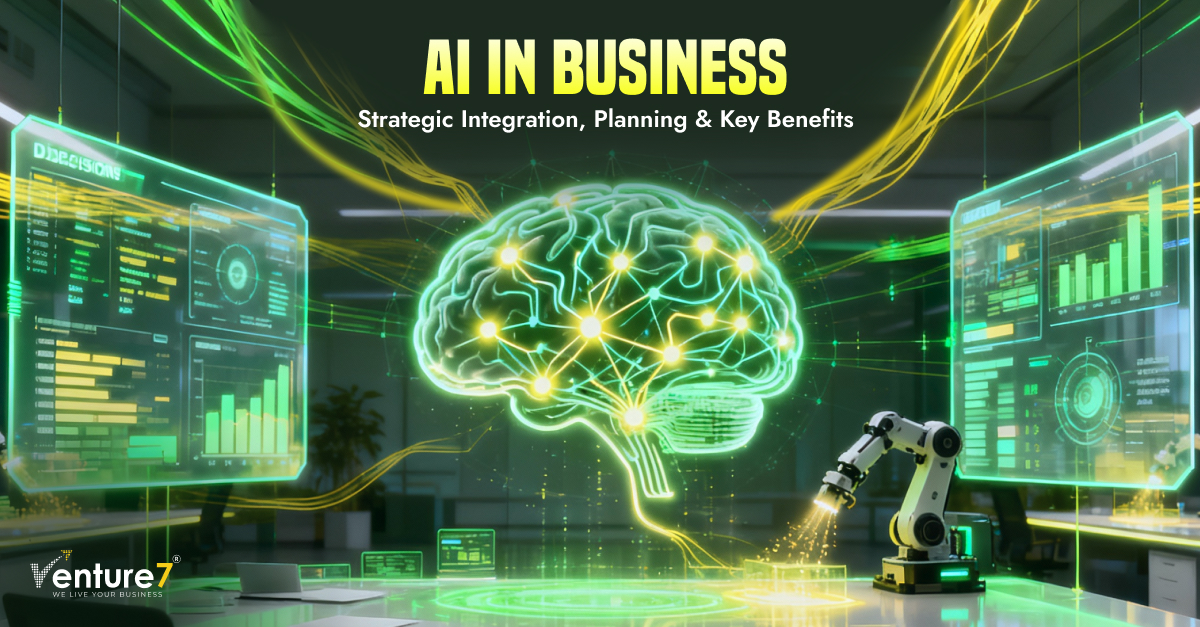
AI in Business: Strategic Integration, Planning & Key Benefits
Artificial Intelligence (AI) has evolved from a futuristic concept to a strategic necessity for businesses across industries. Today, AI is no longer confined to experimental projects or isolated automation initiatives; it is central to shaping competitive advantage, improving operational efficiency, and driving growth. For enterprise leaders, understanding how to integrate AI strategically is crucial. A well-crafted business AI strategy ensures that AI initiatives align with organizational goals, maximize ROI, and deliver measurable value. In this guide, we explore the practical framework for AI adoption, the benefits of AI in business, strategic planning approaches, and real-world insights that can help organizations make informed decisions. An AI business strategy is a roadmap that outlines how an organization leverages artificial intelligence to achieve strategic objectives. It is more than deploying AI tools—it involves identifying business opportunities, aligning AI initiatives with company goals, and ensuring data, technology, and talent readiness. Key components of an AI business strategy include: According to a 2024 McKinsey report, enterprises with a clear AI strategy are three times more likely to achieve above-average revenue growth compared to companies without one. AI transforms how businesses approach both strategy and execution. From market analysis to customer experience optimization, AI enables faster, data-driven decision-making. Strategic areas AI impacts include: For example, retail giants like Amazon use AI-driven recommendation engines to personalize customer experiences, contributing significantly to sales and retention. Similarly, financial institutions deploy AI to detect fraud in real-time, mitigating risks and losses. Implementing a structured AI strategy can create tangible benefits for enterprises, ranging from operational improvements to strategic growth. Major benefits include: Gartner predicts that by 2026, more than 70% of organizations will operationalize AI in at least one critical business function, making it a core driver of competitiveness. AI tools enhance the strategic planning process in several ways: Example: A global logistics company implemented AI-based route optimization, reducing fuel costs by 15% while improving delivery times. The AI system continuously learns from traffic, weather, and shipment patterns to provide real-time recommendations. AI is no longer an experimental tool; it is a strategic lever shaping enterprise growth. Companies that fail to integrate AI risk losing market share and efficiency. Key trends include: Enterprises are deploying AI across multiple functions: Case Study: A U.S.-based healthcare provider implemented AI-driven predictive analytics to manage patient admissions, reducing emergency room overcrowding by 20% and improving patient satisfaction. AI can address diverse enterprise needs, from operational efficiency to innovation acceleration. Practical applications include: Key Insight: Organizations that align AI initiatives with business priorities achieve faster ROI and more sustainable transformation. Artificial Intelligence refers to computer systems capable of performing tasks that typically require human intelligence. In business development, AI is applied to: Example: AI-powered CRM platforms can automate lead nurturing, ensuring personalized engagement and higher conversion rates. A structured AI adoption roadmap ensures measurable outcomes and minimized risks. Key steps include: Venture7® helps enterprises define and implement AI roadmaps that balance strategic vision with operational execution, ensuring measurable business benefits. While AI offers significant potential, enterprises must address challenges: Tip: A phased, well-governed approach mitigates risks and maximizes ROI. The future of AI is marked by deeper integration, smarter automation, and more strategic applications: By 2030, AI is projected to contribute up to $15 trillion to the global economy, highlighting its transformative potential for businesses of all sizes. Strategic AI integration is no longer optional—it is essential for enterprises seeking efficiency, innovation, and competitive advantage. By developing a robust business AI strategy, organizations can unlock measurable ROI, improve operational performance, and accelerate growth. Venture7® partners with enterprises to design, plan, and implement AI solutions tailored to strategic objectives. From AI adoption roadmaps to execution and governance, we help companies harness AI for sustainable business transformation. Take Action: Consult Venture7® AI Development Services today to explore how AI can drive strategic advantage for your organization. Our team of AI experts delivers actionable insights, scalable solutions, and measurable outcomes that empower business leaders to succeed in the digital era. Book AI Demo.Introduction
What Is an AI Business Strategy?
The Role of AI in Strategy & Execution
Benefits of a Successful AI Strategy
AI automates routine tasks, freeing human resources for strategic work. Businesses can reduce operational costs while increasing throughput and accuracy.
AI enables predictive and prescriptive analytics, transforming raw data into actionable insights. Executives can make faster, more informed decisions backed by real-time intelligence.
AI helps identify market opportunities, optimize pricing strategies, and deliver personalized offerings, driving sales and customer loyalty.
AI tools like chatbots, recommendation engines, and sentiment analysis improve engagement and satisfaction, providing measurable ROI on digital initiatives.
The Impact of AI Tools on Strategic Planning
The Impact of AI on Business Strategy Today
How Are Businesses Using AI?
How Can AI Support Your Business Needs?
What is AI and How is it Used in Business Development?
Implementation Roadmap for Businesses
Challenges & Considerations
Future of AI in Business
Conclusion: Consulting Venture7® for AI Success
Browse by categories